Pediatric emergencies demand rapid, structured evaluation. A child’s condition can deteriorate far faster than an adult’s. The PALS primary assessment gives providers a systematic framework to identify life threats and act before a situation becomes irreversible.
Introduction
Pediatric Advanced Life Support is a certification program developed by the American Heart Association. It trains healthcare providers to recognize and respond to life-threatening emergencies in infants and children. The primary assessment is the first and most critical step in that response.
Every second matters when a child is in respiratory distress or circulatory failure. A disorganized assessment wastes time and risks missing critical findings. The PALS primary assessment solves this by giving providers a repeatable, evidence-based sequence that works under pressure.
This framework is used by emergency physicians, nurses, paramedics, and pediatric specialists worldwide. It is not a checklist to be completed slowly — it is a rapid, simultaneous evaluation performed in minutes. Mastering it is fundamental to competent pediatric emergency care.
What is PALS, and Why Does the Primary Assessment Matter?
PALS stands for Pediatric Advanced Life Support. It is an AHA certification course designed for healthcare professionals who respond to pediatric emergencies. The course covers recognition, assessment, and treatment of respiratory failure, shock, and cardiac arrest in children and infants.
The primary assessment is the structured initial evaluation performed immediately upon patient contact. It is distinct from the secondary assessment, which involves a more detailed head-to-toe examination and diagnostic workup. The primary assessment focuses exclusively on identifying and managing immediate life threats.
Its importance cannot be overstated for several reasons:
- Children deteriorate rapidly — Physiological reserves in pediatric patients are smaller; a child can move from stable to critical in minutes
- Presentations are often atypical — Children compensate for illness differently than adults, masking severity until decompensation occurs suddenly
- Intervention timing is critical — Early recognition and treatment of respiratory failure or shock prevents the most dangerous outcome — cardiac arrest
- Structured assessment reduces error — A systematic approach ensures nothing is missed during the cognitive overload of a pediatric emergency
The AHA emphasizes that most pediatric cardiac arrests are not primary cardiac events. They result from progressive respiratory failure or circulatory shock that was either unrecognized or inadequately treated. The primary assessment exists to catch these deteriorating conditions before they reach that irreversible endpoint.
The 5 Essential Components of a PALS Primary Assessment
The PALS primary assessment follows the ABCDE framework — a structured sequence covering five physiological domains. Each component builds on the previous one. Assessment and intervention occur simultaneously rather than sequentially, meaning identified problems are treated as they are found rather than after the full assessment is complete.
A — Airway
Airway assessment is always the first priority. No other intervention is meaningful if the airway is compromised. The goal is to determine whether the airway is patent, maintainable, or in need of immediate intervention.
Key airway assessment actions include:
- Look — Observe for chest rise, visible obstructions, abnormal positioning, or signs of distress
- Listen — Identify abnormal sounds such as stridor, gurgling, snoring, or silence where breath sounds should be present
- Feel — Detect airflow at the nose and mouth
- Assess patency — Determine whether the airway is open spontaneously, requires positioning or suctioning to maintain, or requires an advanced airway device
Pediatric airway anatomy presents unique challenges. A child’s airway is proportionally narrower, the tongue is larger relative to the oral cavity, and the larynx sits higher and more anteriorly than in adults. These features make airway obstruction more likely and management more technically demanding.
Interventions at this stage include repositioning, jaw thrust, suctioning of secretions, or insertion of a nasopharyngeal or oropharyngeal airway. Advanced airway placement is considered if the airway cannot be maintained by less invasive means.
B — Breathing
Once the airway is confirmed or secured, breathing is assessed in detail. The goal is to evaluate the adequacy of ventilation and oxygenation. Respiratory failure is the most common pathway to pediatric cardiac arrest, making this component especially critical.
Breathing assessment includes evaluation of:
- Respiratory rate — Tachypnea is often the earliest sign of respiratory distress in children; rates vary by age and must be compared to age-appropriate norms
- Respiratory effort — Look for nasal flaring, retractions at the suprasternal notch, intercostal spaces, or subcostal region, and use of accessory muscles
- Chest expansion — Assess symmetry and depth of chest rise with each breath
- Lung sounds — Auscultate for air entry, wheezing, crackles, diminished sounds, or absence of breath sounds in any lung field
- Oxygen saturation — Pulse oximetry provides an objective measure of oxygenation; normal SpO₂ is 94 percent or above in most pediatric patients
- Skin color — Pallor, mottling, or cyanosis indicates inadequate oxygenation
Breathing is classified at this stage as adequate, inadequate, or absent. This classification directly drives the next intervention. Inadequate breathing triggers supplemental oxygen, repositioning, or assisted ventilation with a bag-valve mask.
C — Circulation
Circulation assessment evaluates whether the cardiovascular system is delivering adequate oxygen and nutrients to the body’s tissues. Shock in children is frequently compensated initially, meaning blood pressure may appear normal while tissue perfusion is already compromised. Identifying compensated shock requires looking beyond blood pressure alone.
Circulation assessment components include:
- Heart rate — Tachycardia is a sensitive early indicator of shock; bradycardia in a sick child is an ominous sign requiring immediate intervention
- Pulse quality — Assess central pulses at the carotid or femoral artery and peripheral pulses at the radial or brachial artery; weak or absent peripheral pulses with strong central pulses indicate early shock
- Capillary refill time — Normal refill is under two seconds; prolonged refill indicates reduced peripheral perfusion
- Skin signs — Assess temperature, color, and moisture; cool, pale, mottled, or diaphoretic skin suggests impaired circulation
- Blood pressure — Hypotension is a late and serious sign in pediatric shock; its presence indicates decompensated shock requiring immediate aggressive intervention
- Urine output — Where available, reduced urine output reflects decreased renal perfusion and inadequate circulatory volume
Interventions at this stage depend on the type of shock identified. Volume resuscitation, vasopressors, or treatment of the underlying cause are directed by the team leader based on circulation findings.
D — Disability
Disability refers to neurological status — the function of the brain and central nervous system. Altered mental status in a child can result from hypoxia, hypoglycemia, shock, seizures, head trauma, or toxic ingestion. Identifying neurological deterioration early allows targeted intervention before irreversible damage occurs.
Neurological assessment tools used in PALS include:
- AVPU scale — A rapid classification of responsiveness: Alert, Voice-responsive, Pain-responsive, or Unresponsive
- Glasgow Coma Scale (GCS) — A more detailed scoring tool assessing eye opening, verbal response, and motor response; a score of 8 or below indicates severe neurological impairment and typically triggers advanced airway management
- Pupil assessment — Evaluate size, equality, and reactivity to light; asymmetric or unreactive pupils suggest intracranial pathology
- Blood glucose — Hypoglycemia is a rapidly reversible cause of altered mental status in children and must be checked and corrected immediately
- Posturing — Decerebrate or decorticate posturing indicates significant brainstem or cerebral dysfunction
Pediatric providers must use age-appropriate behavioral norms when evaluating neurological status. An alert toddler and an alert infant present very differently. Familiarity with developmental milestones strengthens the accuracy of disability assessment.
E — Exposure
Exposure is the final component of the primary assessment. It involves briefly uncovering the patient to identify injuries, rashes, bleeding, abnormal findings, or environmental factors that may be contributing to the child’s condition. Critical findings are sometimes only visible when clothing and coverings are removed.
Exposure assessment includes:
- Full body visual inspection — Look for bruising, lacerations, petechiae, purpura, rashes, swelling, or deformity
- Temperature assessment — Measure core temperature to identify fever, hypothermia, or hyperthermia as contributing factors
- Signs of trauma — Identify mechanism-related injuries that may not be immediately obvious
- Environmental clues — Note any medications, substances, or environmental conditions present at the scene that may explain the child’s presentation
Exposure must be balanced with the prevention of heat loss. Infants and small children lose body heat rapidly when uncovered. Assessment should be performed efficiently, and the child should be covered again as quickly as possible after examination.
Non-accidental trauma must always be considered during exposure assessment. Unexplained bruising in various stages of healing, burns, or injury patterns inconsistent with the reported history are clinical red flags that require immediate documentation and reporting.
The ABCDE Approach in Action
The ABCDE framework is not intended to be performed as five separate sequential steps. In clinical practice, a skilled PALS provider conducts much of the assessment simultaneously while moving through the sequence. Multiple team members may assess different components at the same time during a coordinated team response.
A practical example of the ABCDE approach in action:
A two-year-old presents unresponsive with labored breathing. The provider immediately assesses the airway — it is partially obstructed by secretions. Suctioning is performed, and airway patency is restored. Breathing assessment reveals increased work of breathing with intercostal retractions and an SpO₂ of 88 percent — supplemental oxygen is applied immediately. Circulation assessment finds tachycardia, prolonged capillary refill, and cool extremities — intravenous access is established, and fluid resuscitation is initiated. Disability assessment reveals a GCS of 10 with sluggish pupils — glucose is checked and found to be low, prompting dextrose administration. Exposure reveals a petechial rash — meningococcal sepsis is considered, and the team leader escalates the treatment plan accordingly.
In this example, findings at each step immediately trigger an intervention. The assessment and treatment cycle runs in parallel rather than in sequence. This simultaneous approach is what makes the PALS primary assessment a dynamic and life-saving clinical tool rather than a passive checklist.
Common Mistakes to Avoid During Primary Assessment
Even experienced providers make errors during pediatric primary assessment. High-stress environments, unfamiliar patient ages, and the emotional weight of pediatric emergencies all contribute to performance lapses. Awareness of common mistakes supports better execution under pressure.
Frequent errors in PALS primary assessment include:
- Skipping components under pressure — Stress drives providers to jump to treatment before completing assessment; missing the disability component, for example, can leave hypoglycemia undetected and untreated
- Using adult norms for pediatric vital signs — A heart rate of 130 is normal in an infant but tachycardic in a ten-year-old; age-appropriate reference values must be used
- Relying solely on blood pressure to assess circulation — Hypotension is a late sign in pediatric shock; normal blood pressure does not rule out compensated shock
- Inadequate exposure — Leaving clothing in place to avoid disturbing the child results in missed findings that change the diagnosis and treatment plan
- Over-relying on pulse oximetry — SpO₂ can read falsely normal in carbon monoxide poisoning and other conditions; clinical assessment must accompany all monitoring data
- Failure to check glucose — Hypoglycemia is common in critically ill children and is rapidly correctable; it must be included in every disability assessment
- Allowing assessment to pause treatment — Identified life threats are treated immediately; the assessment does not pause to allow treatment to complete
How PALS Training Prepares You for Pediatric Emergencies
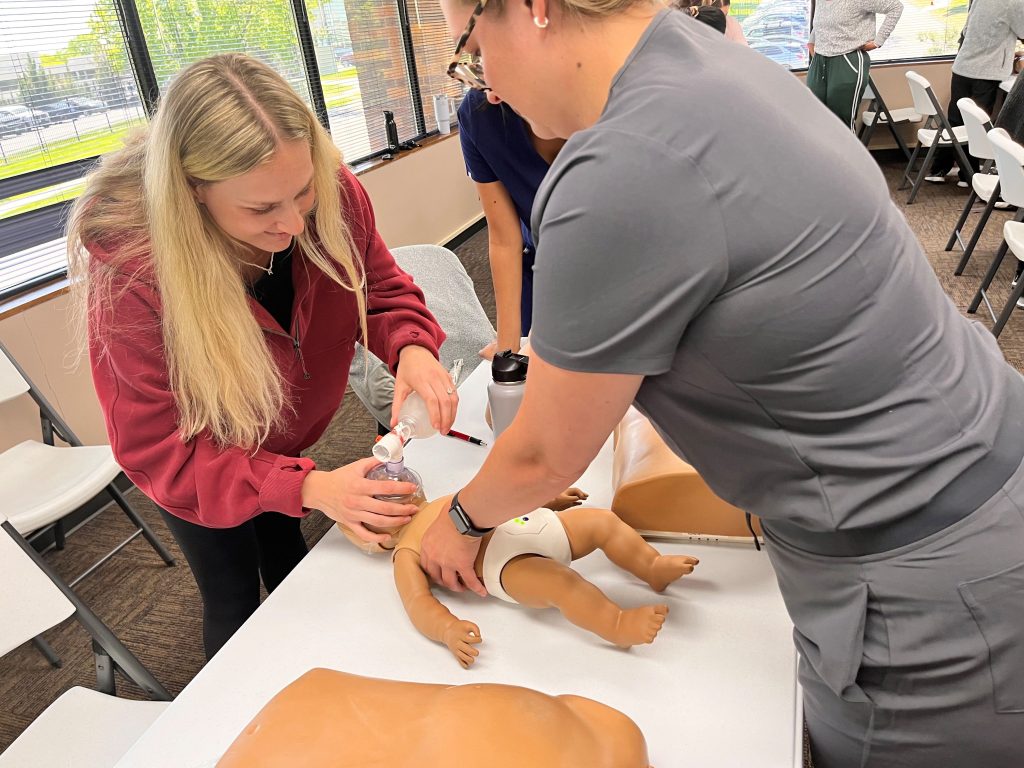
PALS certification provides healthcare providers with the knowledge, skills, and team-based competency to manage pediatric emergencies effectively. The course moves beyond didactic instruction into hands-on simulation that replicates the complexity of real clinical scenarios.
PALS training prepares providers through:
- Case-based learning — Scenarios covering respiratory distress, respiratory failure, shock, and cardiac arrest develop pattern recognition and clinical decision-making
- Skills stations — Hands-on practice in airway management, vascular access, rhythm recognition, and medication administration builds technical proficiency
- Team simulation — Multi-provider resuscitation scenarios develop communication, role clarity, and coordination under realistic conditions
- Algorithm training — PALS algorithms provide structured decision trees for the most common pediatric emergency presentations, reducing cognitive load during real events
- Debriefing — Structured post-scenario review reinforces correct behavior and identifies performance gaps in a constructive learning environment
PALS certification is required for nurses, physicians, paramedics, and respiratory therapists working in pediatric emergency, critical care, and transport settings. Certification is valid for two years. The AHA recommends regular skill reinforcement between certification cycles to maintain assessment accuracy and intervention competency.
The primary assessment framework taught in PALS is applicable across every pediatric emergency setting — from the emergency department to the field. It is the cognitive foundation upon which every subsequent clinical decision is built. Providers who master it respond faster, make better decisions, and give pediatric patients the best possible chance of survival.
FAQs
Q1: What are the 5 components of a PALS primary assessment? The 5 components of a PALS primary assessment are Airway, Breathing, Circulation, Disability, and Exposure — commonly remembered by the acronym ABCDE. Each component helps healthcare providers quickly identify and prioritize life-threatening conditions in pediatric patients.
Q2: Why is the PALS primary assessment important in pediatric emergencies? The PALS primary assessment provides a rapid, systematic approach to evaluating a critically ill or injured child. By moving through each component in order, providers can detect problems like airway obstruction, respiratory failure, or poor perfusion early — before a child’s condition deteriorates further.
Q3: Do I need PALS certification to perform a primary assessment on pediatric patients? Yes — PALS (Pediatric Advanced Life Support) certification equips healthcare providers with the knowledge and hands-on skills to confidently perform a primary assessment and respond to pediatric emergencies. Certification ensures you’re following the latest American Heart Association guidelines.
Conclusion
Understanding the 5 components of a PALS primary assessment — Airway, Breathing, Circulation, Disability, and Exposure — is essential for any healthcare provider who works with pediatric patients. A thorough, systematic assessment can mean the difference between a positive outcome and a critical delay in care. Whether you’re working in an emergency department, ICU, or pediatric unit, mastering the PALS primary assessment gives you the confidence and competence to act decisively when it matters most.
Call to Action
Ready to master pediatric emergency care? CPR Tampa is an American Heart Association-authorized training site offering stress-free, hands-on PALS classes in Tampa for both initial certification and renewal. Our expert instructors will guide you through every component of the PALS primary assessment in a supportive, hands-on environment.
Need to renew your BLS or get CPR certification in Tampa first? We’ve got you covered — CPR Tampa offers BLS for Healthcare Providers, ACLS, PALS, and CPR & First Aid courses all in one place.